

Caspian International School of Medicine CISM
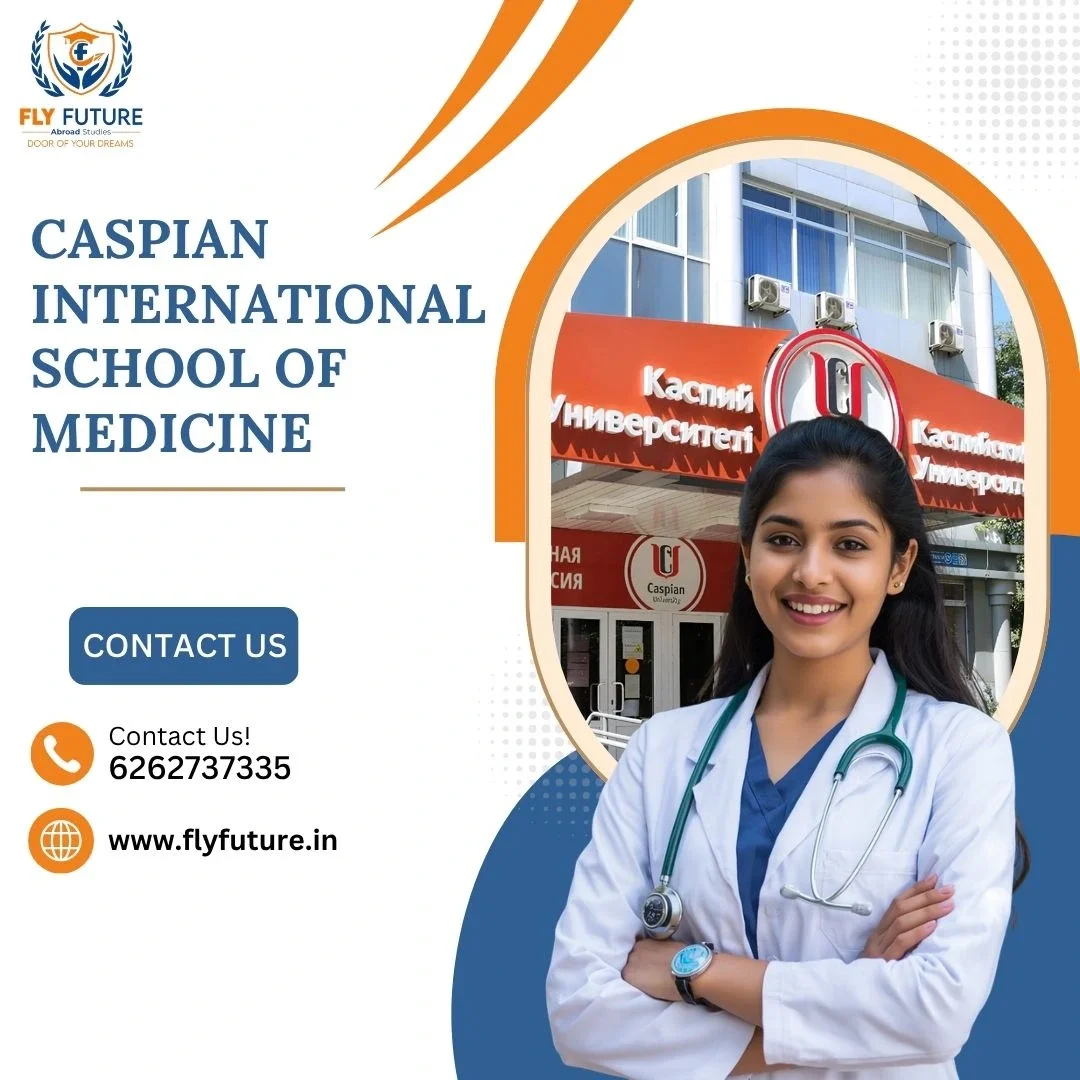
One of Kazakhstan's cutting-edge medical schools, Caspian International School of Medicine is committed to offering top-notch medical education in line with global norms. The university, which is located in Almaty, the biggest city in the nation, enjoys the advantages of a multicultural academic setting, a dynamic educational ecosystem, and cutting-edge healthcare facilities.
Caspian University, a reputable university with programs in medicine, healthcare, law, engineering, economics, and business, is home to the medical school. To improve hands-on learning for medical students, the institution has made large investments throughout the years in simulation labs, research facilities, and relationships with hospitals.
The goal of the MBBS program is to develop qualified physicians with outstanding clinical and communication abilities in addition to solid theoretical knowledge. The university places a strong emphasis on patient-centered healthcare, ethical medical practice, problem-solving skills, and evidence-based medicine.
Because of its reasonable tuition, English-medium education, international reputation, and welcoming campus community, students from India, Nepal, Bangladesh, Pakistan, Africa, and other Middle Eastern countries select Caspian International School of Medicine CISM.
Since its founding in 1992, Caspian University has worked for more than thirty years to establish a reputation for academic honesty and state-of-the-art facilities. The institution used its academic resources to establish a specialized, international medical wing in order to address the lack of qualified medical personnel worldwide. The World Health Organization (WHO), the World Federation for Medical Education (WFME), and the National Medical Commission (NMC) of India all have stringent regulations that must be met by the full 6-year MD/MBBS curriculum offered by CISM.
Quick Overview of Caspian International School of Medicine Kazakhstan (CISM)
| Particular | Details |
| University Name | Caspian International School of Medicine |
| Location | Almaty, Kazakhstan |
| Established | 1992 (Caspian University); School of Medicine established later as part of the university |
| Course Offered | MBBS (General Medicine) |
| MBBS Duration | 6 Years (Including Internship) |
| Medium of Instruction | English |
| Annual Intake | September/October |
| Eligibility | NEET Qualified + 50% in PCB (General Category) |
| Recognition | NMC, WHO and other international organizations (subject to applicable listings and regulations) |
| Hostel | Available |
| Indian Food | Available |
| Clinical Training | Affiliated Hospitals |
Curriculum and Structure of the MBBS Program
The six-year MBBS program at CISM is broken up into three main stages:
Phase 1 (Years 1-2): Pre-Clinical
- Pay attention to the fundamental medical disciplines, such as anatomy, physiology, biochemistry, psychology, and biophysics.
- Overview of medical ethics and communication techniques
- Utilizing virtual labs and digital learning platforms
Phase 2: Paraclinical (Years 3–4)
- Pathology, Microbiology, Pharmacology, and Forensic Medicine are among the topics covered.
- Early exposure to patient case studies and hospital environments
- Combining clinical reasoning with diagnostic abilities
Phase 3: Clinical (Years 5–6)
Rotations in the following key departments:
- Pediatrics, orthopedics, ENT, internal medicine, surgery, obstetrics and gynecology, and ophthalmology
- Direct patient care under supervision
- Getting ready for the internship and final licensing exams
Caspian International School of Medicine: Why Choose It?
When choosing a medical school, it's important to consider things like professors, career options, clinical exposure, infrastructure, affordability, and quality of education. A well-rounded mix of these benefits is provided by Caspian International School of Medicine.
1. Modern Medical Curriculum
Clinical practice and fundamental sciences are included into the curriculum. Anatomy, physiology, pathology, pharmacology, microbiology, surgery, internal medicine, pediatrics, obstetrics, gynecology, and other fundamental subjects are taught to students in an organized way.
2. Skilled Teachers
Qualified instructors, researchers, and practicing physicians who contribute both academic knowledge and practical medical experience to the classroom are employed by the university.
3. Advanced Laboratories
Students acquire useful information by:
- Laboratories for dissecting anatomy
- Laboratories for histology
- Laboratories for biochemistry
- Clinical simulation facilities
- Laboratories for physiology
- Laboratories for microbiology
These facilities provide practical experience to supplement classroom instruction.
4. Clinical Training in Hospitals
Students can see and take part in patient care under supervision during clinical rotations. This fosters the development of critical diagnostic and communication skills while bridging the gap between theory and practice.
5. Reasonably priced tuition
The university's reasonably priced tuition is one of its main advantages. At a price that is frequently significantly less than that of many private medical schools, students receive a top-notch education.
6. English-Medium Instruction
International students can concentrate on their medical studies without having to learn a second language thanks to English-language education. In order to communicate with patients during clinical practice, students may also learn some basic Russian or Kazakh.
Recognition and Accreditation
CISM’s medical programs are fully recognized and accredited by the following bodies:
| Accreditation Body | Status | Implication |
| Ministry of Education and Science of Kazakhstan (MES RK) | Accredited | Valid degree in Kazakhstan |
| National Medical Commission (NMC), India | Recognized | Eligible for FMGE & practice in India |
| World Health Organization (WHO) | Listed | Global recognition & eligibility for international exams |
| ACQUIN (Germany) | Institutional Accreditation | Quality assurance aligned with EU standards |
| NAAR (Kazakhstan) | National Accreditation | Compliance with local educational norms |
| ECFMG (USA) | Recognized Program | Eligibility for USMLE & residency in USA |
Eligibility for Indian Students
Indian students must fulfill the following requirements in order to apply to CISM's MBBS program:
Age: As of December 31 of the admission year, at least 17 years old
Academic Background:
- Completed Physics, Chemistry, and Biology (PCB) in 10+2 (CBSE, ISC, State Board)
- PCB aggregate must be at least 50% (40% for reserved categories).
- NEET Qualification: In order to comply with NMC regulations, you must have passed NEET within the last three years.
- Language Proficiency: Since the curriculum is English-medium, no further English test is necessary.
- Medical Fitness: A current medical certificate attesting to one's physical and mental well-being
- Passport: A valid international passport is required to obtain a visa.
- Students who meet these requirements can be considered for admission.
Mission & Vision
To produce highly qualified, morally upright, and internationally competent medical professionals who can use creativity, research, and compassionate patient care to solve healthcare issues.
- Our mission is to provide medical education that is in line with worldwide standards.
- Encourage innovation and scientific research.
- Promote clinical practice that is grounded in evidence.
- Encourage ethical responsibility and professionalism.
- Encourage lifelong learning and ongoing career advancement.
- Get graduates ready for jobs in a variety of healthcare systems.
MBBS Program at (CISM) Caspian International School of Medicine
The curriculum progressively moves students from basic sciences to practical patient care while adhering to globally recognized medical education norms.
Because the program is taught in English and places a strong emphasis on hands-on learning in addition to classroom instruction, it is especially appealing to international students. Students gain proficiency in clinical decision-making, diagnostics, patient communication, ethics, and evidence-based medicine throughout the course.
| Particular | Details |
| Course Name | MBBS / General Medicine |
| Total Duration | 6 Years |
| Academic Study | 5 Years |
| Clinical Internship | 1 Year |
| Medium of Instruction | English |
| Practical Training | Included |
| Clinical Rotations | Included |
| Degree Awarded | Medical Degree Equivalent to MBBS (subject to applicable regulations) |
 Academic Departments
The university includes multiple academic departments that contribute to comprehensive medical education.
Some of the key departments include:
- Department of Anatomy
- Department of Physiology
- Department of Biochemistry
- Department of Pharmacology
- Department of Pathology
- Department of Microbiology
- Department of Internal Medicine
- Department of Surgery
- Department of Pediatrics
- Department of Obstetrics & Gynecology
- Department of Psychiatry
- Department of Neurology
- Department of Dermatology
- Department of Radiology
- Department of Emergency Medicine
- Department of Community Medicine
- Department of Family Medicine
Procedure for Admission
For foreign applicants, the admissions process is intended to be simple.
Step 1: Investigate the University
Examine the university's offerings, prerequisites, cost, and standing.
Step 2: Send in the application
Fill out the application and attach the necessary academic files.
Step 3: Verification of Documents
The eligibility of the supplied documents is assessed by the university.
Step 4: Choosing to Admit
The university extends an invitation or offer of admission to qualified applicants.
Step 5: Paying the Fee
As directed by the university, pay the necessary tuition or admission-related expenses.
Step 6: Applying for a Visa
Utilizing the admission documents and other necessary documentation, submit an application for a student visa.
Step 7: Go to Kazakhstan
Students can plan their travels and finish their university enrollment when they arrive after obtaining the visa.
Why Choose Kazakhstan for Study MBBS ?
Kazakhstan has quickly emerged as one of the most popular locations for international medical education. The nation provides a great mix of high-quality education, reasonably priced tuition, state-of-the-art facilities, and internationally recognized medical degrees.
Kazakhstan is attractive among Indian students for a number of reasons:
Reasonably Priced Medical Education
Kazakhstan offers more cheaper tuition than many private medical institutes in India and universities in the USA, UK, or Australia. An globally recognized MBBS degree is not too expensive for students to seek.
Programs in English
International students can enroll in MBBS programs in English at the majority of universities, including Caspian International School of Medicine. This makes it easier for first-year students to comprehend difficult medical topics without being hampered by a language barrier.
Globally Recognized Degrees
Kazakhstan's medical schools adhere to internationally recognized academic standards and are acknowledged by numerous international organizations. Depending on the laws of various nations, graduates may be qualified to pursue licensure pathways in other nations.
Outstanding Clinical Experience
Under the guidance of experts, students engage with patients in connected hospitals as part of their practical training. Clinical reasoning, diagnostic abilities, and professional confidence are all enhanced by this exposure.
A secure setting
Kazakhstan is regarded as a friendly country for foreign students. Universities have departments specifically designed to help overseas students with their studies, housing, and adjusting to campus life.
Diversity of Cultures
Students from various nations study together, fostering opportunities for international friendships, cooperation, and cross-cultural learning.
FAQ's
Q1- Is the MBBS degree from Caspian International School of Medicine valid in India?
Yes. The degree conforms to the National Medical Commission's (NMC) Foreign Medical Graduate requirements and is fully recognized by the World Health Organization.
Q2- Which language is the main one that CISM uses to instruct foreign students?
The full six-year MBBS/MD curriculum is taught in English. However, in order to interact with patients during their clinical rotations, students enroll in early introductory sessions in Kazakh or Russian.
Q3- Does the campus have an Indian mess?
Yes. Indian students find it much simpler to adapt to life overseas because to the university's dedicated dining facilities that serve real Indian food (vegetarian and non-vegetarian alternatives).