

Siberian State Medical University
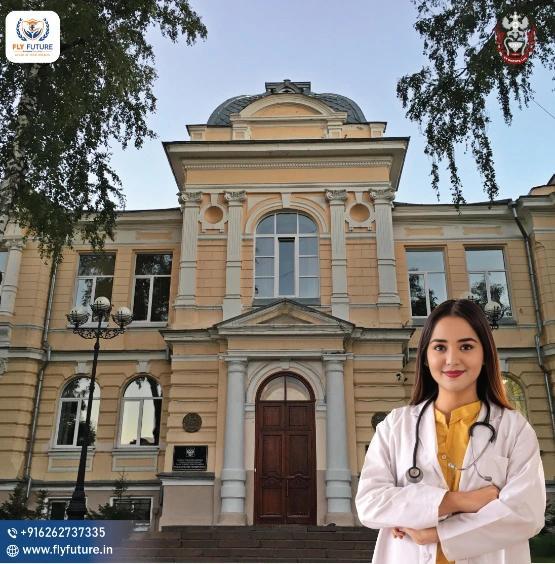
Siberian State Medical University SibMed/Sibsmu Russia 2026-27
Siberian State University is located in the Tomsk region of Russia. It was founded in May 1888 by decree of Emperor Alexander II. It is part of the list of the 3 best medical universities in Russia. It is the only university to be awarded the status of a flagship university. The university has teachers who are proficient in teaching. Together with one other university, SibMeD was given the opportunity to cooperate with the Government of the Russian Federation on a project planned to increase the export of education in the country.
A teaching hospital is a great place for aspiring doctors to learn and train. The hospital will treat roughly a thousand patients from all over the country. In Tomsk, the library of the Siberian State University is the only public library that is considered the best university in Russia, as indicated in the annual Academic of Evidence based medicine library ranking in 2016. In 2015, it became the only university in Russia to be accredited by Technopark Skolkovo. It is a university that has gained worldwide freedom with more than 6500 students. It has a very diverse population of international students coming from 39 other countries.
Siberian State Medical University is ranked 5th among all medical faculties in Russia under the Ministry of Health of Russia (according to the ranking published by the Indian Embassy in Moscow for Indian students). It has been more than 4 years since the university started MBBS English Medium Course in Russia for students from foreign countries. Since then, the university has slowly started gaining popularity among students from India and many other countries. The university is very actively involved in scientific and research activities related to the field of medicine.
Its history of medical education dates back to the late 1800s; according to WDOMS, classes began in 1888.
Originally a medical school, the institution has evolved into a multidisciplinary university offering programs in biology, medicine, pharmacy, and other healthcare-related fields.
According to the university's own published data, it has taught over 5,000 students and produced tens of thousands of physicians and pharmacists over the course of its existence. Additionally, it states that a sizable percentage of academic employees have scientific degrees.
SSMU operates under the administration of the Ministry of Health and the Ministry of Science and Higher Education of the Russian Federation. It received university status in 1992, before that it was known as Tomsk Medical Institute. Till date more than 200 students from India have taken admission in Tomsk to study English medium MBBS course in Russia. Among all foreign students who come to Tomsk to study medicine every year, the majority are Indian students.
Siberian State Medical University Ranking :
Country : 107
World : 3135
QUICK HIGHLIGHTS ABOUT SIBERIAN STATE MEDICAL
| Key Parameter | Details |
| Official Name | Siberian State Medical University (SibMed) |
| Year Established | 1878 (Decree by Emperor Alexander II); opened in 1888 |
| Location | Tomsk, Tomsk Oblast, Russian Federation |
| Institutional Type | Public / State Medical University |
| Special Distinction | Only Flagship Medical University in Russia (designated by the Ministry of Education & Science) |
| Global Recognition | WHO, NMC (India), ECFMG (USA), FAIMER, WFME |
| Primary Language of Instruction | English (for international General Medicine track), Russian |
| Total Enrollment | 6,500+ students from 39+ countries |
| Primary Hospital Facilities | Multi-specialty university clinics with 100,000+ patient encounters per year |
| Teaching Faculty | 790+ professors, clinical instructors, and scientists |
ELIGIBILITY FOR MBBS ADMISSION AND DOCUMENTS REQUIRED:-
ELIIBILTY CRITERIA
- Candidate must have Indian Nationality.
- Candidate must have clear 12th standard in Physics, Chemistry, Biology and English subjects.
- The applicant must be 17 years old by December 31 of the year of application.
- Applicant must clear NEET exam.
REQUIRED DOCUMENTATION
- 10th and 12th passing marks and transfer letters
- Bachelor's graduation certificate and transfer certificate
- Copy of international passport (should be valid for at least 2 years) and any other proof of identity.
- 8 passport size photos.
- Bank balance certificate or financial documents.
- Return ticket with an open return date within 1 year of arrival.
- Mental and physical fitness confirmed by the Ministry of Foreign Affairs.
- Birth certificate on arrival
HOSTEL ACCOMODATION:-
- Each campus room includes a bed, pillow, mattress, blanket, table with chair, water heaters and suitable lighting for studying and relaxing.
- All rooms in the hostel are furnished and vary in size and Wi-Fi in most rooms.
- Dormitories can accommodate 2 or 3 students in each room.
- There are common areas where students can socialize and can arrange a sports, cultural and educational program.
- Each room in the campus is equipped with a kitchen for students to cook food of their choice. Students will only need to arrange their own dishes and cooking.
- The administrative unit of the university is responsible for housekeeping, room cleaning and student safety.
- For international students, there is a canteen provided by the campus according to their diet.
- Attached washrooms are available in all rooms
Siberian State Medical University Fees Structure 2026-27
| University | 1st Year | 2nd Year | 3rd Year | 4th Year | 5th Year | 6th Year | Total |
|---|---|---|---|---|---|---|---|
| Siberian State Medical | 4,10,000 RUB | 4,10,000 RUB | 4,10,000 RUB | 4,10,000 RUB | 4,10,000 RUB | 4,10,000 RUB | 24,60,000 RUB |
| Siberian State Medical | 4,10,000 INR | 4,10,000 INR | 4,10,000 INR | 4,10,000 INR | 4,10,000 INR | 4,10,000 INR | 24,60,000 INR |
Note :
I RUB = 1 INR
Hostel Fee : 70000 RUB = 70000 INR Per Year (Approx)
Visa & Medical Insurance : 200$ = 15000 INR Per Year (Approx)
Siberian State Medical University vs Other Russian Medical Universities
| Feature | Siberian State Medical University | Kazan State Medical University | Volgograd State Medical University | Tver State Medical University |
| Year Established | 1878 | 1814 | 1935 | 1936 |
| City | Tomsk | Kazan | Volgograd | Tver |
| World Rank | 4740 | 3800 | 3108 | 282 |
| Country Rank | 116 | 194 | 109 | 282 |
| Medium of Instruction | English/Russian | English/Russian | English/Russian | English/Russian |
| Recognition | NMC, WHO, ECFMG, WDOMS | NMC, WHO, ECFMG, WDOMS | NMC, WHO, ECFMG, WDOMS | NMC, WHO, ECFMG, WDOMS |
| Course Duration | 6 years (inc. internship) | 6 years (inc. internship) | 6 years (inc. internship) | 6 years (inc. internship) |
| Hostel & Mess Facility | Available | Available | Available | Available |
| FMGE Passing Rate | High | High | Moderate–High | Moderate–High |
Siberian State Medical University vs Indian Medical Universities
| Feature | Siberian State Medical University | Government Medical College (India) | Private Medical College (India) | |
| Year Established | 1878 |
|
Varies | |
| Location | Tomsk, Russia | Major State Capitals | Metro/Urban/Small Cities | |
| Medium of Instruction | English/Russian |
|
English/Hindi/Regional | |
| Recognition | NMC, WHO, ECFMG, WDOMS | NMC, WHO | NMC, WHO | |
| Course Duration | 6 years (inc. internship) | 5.5 years (inc. internship) | 5.5 years (inc. internship) | |
| Hostel & Mess Facility | Available | Available/Often limited | Available/Often limited | |
| Entry Competitiveness | Moderate (50%+ PCB + NEET) | Extremely High | Moderate (private admission + NEET) | |
| FMGE Passing Rate | High (for SibMed) | Not required (in India) | Not required (in India) | |
| Indian Food/Culture | Indian mess available | Native availability | Sometimes available |
Why to Choose Siberian State Medical University ?
- It has an almost 130-year-old history of training more than 60,000 students.
- The university offers a wide range of courses from clinical psychology to social work. All kinds of degrees are available, be it Masters, Bachelors or PhDs.
- Currently, over 6,000 students are fulfilling their dreams at this prestigious university.
- The medium of instruction is English and Russian, which makes it suitable for both local and foreign students.
- A number of international scholarships are available.
- Graduates include two presidents of the Russian Academy of Medical Sciences.
- It offers students various internship opportunities.
- The university is approved by MCI and is suitable for Indian students.
- The university does not require IELTS or TOEFL scores.
- The admission process is generally easy.
- The university is bilingual.
- The fee structure is affordable unlike most private Indian institutes and western universities.
- Around 12% of seats are reserved for international candidates, which makes admission easier.
- Students are trained here for the MCI screening test.
- The cost of living is feasible and comparatively lower than in western countries.
Why location matters for Indian students ?
Location affects:
- Climate adaptation
- Travel arrangements
- Food preferences
- Accommodation
- Transportation
- Living costs
- Availability of Indian groceries
- Distance from major Russian airports
- Emergency travel planning
- Cultural adjustment
Duration of the Medical Course
| Component | Detailed Timeline & Structure |
| Total Program Duration | 6 Years (12 Semesters) |
| Academic & Pre-Clinical Phase | Year 1 to Year 3 (Focused on fundamental medical sciences, anatomy, and theoretical foundation) |
| Clinical Clerkship Phase | Year 4 to Year 5 (Hospital-based rotations, bedside learning, and specialized medicine) |
| Integrated Practical Internship | Year 6 (12-month compulsory clinical internship across university teaching hospitals) |
| Total Academic Credits & Hours | Over 5,400+ hours of rigorous theoretical, lab, and clinical training (fully meets WHO and NMC guidelines) |
| Medium of Instruction | English Medium for the entire 6-year duration (supplemented by conversational medical Russian for patient interaction) |
Academic Structure: What Students Study
| Academic Year | Core Curriculum & Key Subjects Covered |
| 1st Year (Semesters 1 & 2) |
• Human Anatomy & Medical Terminology • Medical Biology, Genetics & Parasitology • Histology, Cytology & Embryology • General, Bio-organic & Physical Chemistry • Medical Physics & Mathematics • Latin Language & Russian Language for Medical Communication |
| 2nd Year (Semesters 3 & 4) |
• Advanced Human Anatomy & Neuroanatomy • Normal Human Physiology • Medical Biochemistry • Microbiology, Virology & Immunology • Cell Biology & General Pathology Fundamentals • Basics of Patient Care & First Aid |
| 3rd Year (Semesters 5 & 6) |
• Pathological Anatomy (General & Special) • Pathophysiology / Pathological Physiology • Basic & Clinical Pharmacology • Propaedeutics of Internal Diseases (Physical Diagnostics) • General Surgery & Operative Surgical Techniques • Medical Genetics & Hygiene |
| 4th Year (Semesters 7 & 8) |
• Internal Diseases (Cardiology, Pulmonology, Gastroenterology) • General & Specialized Surgery (Urology, Orthopedics) • Obstetrics & Gynecology • Ophthalmology (Eye Diseases) • Otorhinolaryngology (ENT) • General Hygiene & Community Medicine |
| 5th Year (Semesters 9 & 10) |
• Pediatrics & Child Health • Neurology, Neurosurgery & Psychiatry • Infectious Diseases & Epidemiology • Oncology & Clinical Hematology • Traumatology, Emergency Medicine & Anesthesiology • Clinical Psychology & Primary Care Medicine |
| 6th Year (Semesters 11 & 12) |
• Supervised Clinical Internship in Internal Medicine Wards • Surgical rotations & Intensive Care Unit (ICU) Clerkships • Advanced Obstetrics, Gynecology & Neonatal Care • Emergency Medicine, Outpatient Care & Public Health • High-Fidelity Simulation Center Training & Practical Exam Prep • Final State Licensing Examination |
 How to Carefully Choose a Russian Medical University ?
Academic questions
- What qualification will I receive?
- What is the exact duration?
- Which language is used?
- What is the current curriculum?
- Where are clinical classes conducted?
Financial questions
- What is the annual tuition?
- Can tuition change?
- What is the hostel cost?
- What is the expected monthly living budget?
- Are there additional university charges?
Regulatory questions
- Is the qualification recognized in the country of study?
- What are the current NMC requirements?
- Does the course satisfy the applicable foreign medical graduate regulations?
Practical questions
- How do international students obtain accommodation?
- How is visa support handled?
- What medical documents are needed?
- What happens if a student needs academic assistance?
Career Opportunities After Graduation
| Career Pathway / Region | Detailed Post-Graduation Opportunities |
| Medical Practice in India (NEXT / FMGE) | Graduates can return to India and sit for the NExT (National Exit Test) / FMGE. Because SibMed’s curriculum aligns with NMC guidelines, students are eligible to secure permanent registration and practice as licensed medical officers or pursue MD/MS postgraduate seats in India. |
| Practice in the United States (USMLE / ECFMG) | SibMed is listed in WDOMS and recognized by ECFMG / FAIMER. Graduates can complete USMLE Step 1, Step 2 CK, and Step 3 to apply for residency matching (PG training) across hospital networks in the United States. |
| Practice in the UK (PLAB / UKMLA) | The degree is recognized by the General Medical Council (GMC). Graduates are eligible to take the PLAB/UKMLA assessments to join the NHS system as junior doctors or enter specialty training pathways. |
| Postgraduate Residency in Russia & Europe | Graduates can enter Ordinaatura (2–3 years of clinical residency) in Russia or apply for medical specialization across Europe and CIS countries in fields like General Surgery, Cardiology, Neurology, or Pediatrics. |
| Biomedical Research & Academic Careers | Given SibMed's status as a flagship research hub, graduates can pursue PhD programs, join university research centers, or work in international pharmaceutical R&D, clinical trials, and epidemiological research. |
| Healthcare Administration & Public Health | Graduates can pursue Master's degrees in Public Health (MPH) or Healthcare Management to work with global health bodies (e.g., WHO, UNICEF), hospital management groups, or health policy institutes. |
Safety and Personal Responsibility
| Safety & Responsibility Area | Practical Guidelines & University Measures |
| Campus & Hostel Security Systems | University dormitories operate under 24/7 security surveillance, electronic key-card access control, and dedicated security guards. Visitors are strictly monitored, and curfew times are enforced for resident safety. |
| Tomsk City Environment & Public Safety | Tomsk is known as "The Student Capital of Siberia," with over 20% of its population being students. It maintains low crime rates and a peaceful, student-friendly atmosphere day and night. |
| Winter Climate Safety & Responsibility | Winter temperatures in Tomsk drop significantly (below -20°C to -30°C). Students are responsible for wearing thermal clothing, insulated winter boots, gloves, and caps. All campus buildings and hostels feature high-grade central heating. |
| Legal Compliance & Passport Registration | International students must register their passport and visa with the SibMed International Office within 3 business days of arrival in Russia. Maintaining valid visa extensions, medical insurance, and legal status is compulsory. |
| Health Insurance & Medical Support | Annual comprehensive medical insurance is mandatory for all foreign students. It covers emergency care, consultations, diagnostic tests, and hospitalization directly at SibMed’s university clinics. |
| Code of Conduct & Cultural Adaptation | Students must adhere to university guidelines, maintain required academic attendance, and respect local Russian laws, customs, and hostel regulations to ensure a smooth, safe stay. |
FAQ's
1. What is the location of Siberian State Medical University ?
One of Siberia's oldest educational and cultural hubs, Tomsk, Russia, is home to Siberian State Medical University (SibMed).
2. Is SibMed's MBBS degree accepted in India ?
Yes. The National Medical Commission (NMC), India, recognizes Siberian State Medical University's MBBS degree as long as students pass the FMGE/NExT test, finish the entire program, and qualify for NEET.
3. How long does SibMed's MBBS program last ?
SibMed's MBBS program lasts six years, which includes a year-long internship or clinical rotation.
4. What language does SibMed use to teach MBBS ?
The MBBS program is available to overseas students in English. In order to interact with patients during clinical practice, students are also taught how to speak Russian.
5. What are the requirements for SibMed's MBBS admission ?
At least 50% in Class 12 Biology, Chemistry, and Physics.
For Indian students, passing the NEET exam is a requirement.
between the ages of 17 and 25 when they are admitted.
6. Does SibMed offer accommodations for hostels ?
Yes. For overseas students, the university provides comfortable dorms with amenities including Wi-Fi, kitchens, laundry rooms, and security.
7. Does SibMed serve Indian and vegetarian food ?
Yes. Indian student communities frequently assist new students in finding appropriate dining arrangements, and many hostels and cafeterias offer vegetarian and Indian food options.
8. What is SibMed's clinical exposure like ?
Because of its affiliation with contemporary teaching hospitals in Tomsk, SibMed provides students with substantial and early exposure to patient care, real-world medical issues, and hands-on training.
9. Can SibMed graduates practice medicine overseas ?
Yes. Graduates who pass the appropriate license tests (USMLE, PLAB, etc.) can practice medicine not only in India but also in the USA, UK, Canada, and the Middle East.
Are you planning to study in Siberian State Medical University 2026-27 ?