

Orel State University
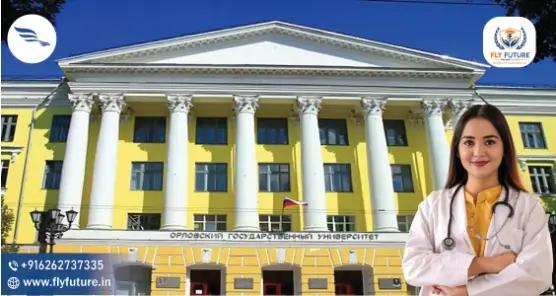
Orel State University OSU Russia | MBBS Abroad in Russia 2026-27
Orel State University was founded in 1931. This university is among the best medical universities for MBBS in Russia. The Association of Classical Universities of the Russian Federation merged with Orel State University. This is the only university in the country to have this association. At the country level, this university is ranked 164, while it is ranked 4731 in the world.
The university is accredited by the Ministry of Science and the University of the Russian Federation. Orel State University has a total of five departments. The university offers several study programs and courses. Orel State University is also known for providing its students with the benefits of academic and non-academic services consisting of library facilities and other administrative facilities.
During MBBS at Orel State University, students will be able to engage in and benefit from various activities. Plus, there will be plenty for them to explore as they pursue extracurricular activities. They can easily advance in all the activities going on around and can also secure good positions.
Until and unless they feel that you are satisfied, they will not proceed with something that will allow you to feel disappointed. Therefore, choosing the option of MBBS in Russia at Orel State University is not a bad choice.
Under the Russian Federation's Ministry of Science and Higher Education, the university functions as a multidisciplinary public institution that offers more than 110 educational programs in 14 training areas and specializations. As a member of the Association of Classical Russian Universities, it retains its status as a classical university, but its medical faculty—which trains future physicians, pediatricians, dentists, and other healthcare professionals—remains its most prominent feature.
Orel State University Ranking :
Country : 164
World : 4731
QUICK HIGHLIGHTS ABOUT OREL STATE MEDICAL
| Feature / Metric | Details |
| Official Name | Orel State University named after I.S. Turgenev (Medical Institute) |
| Year of Establishment | 1931 |
| University Type | Public / Government Federal University |
| Location | Oryol (Orel Oblast), Russian Federation |
| Primary Degree Offered | MD / General Medicine (equivalent to MBBS in India) |
| Course Duration | 6 Years (5 Years Academic + 1 Year Internship) |
| Medium of Instruction | 100% English Medium for International Students |
| Global Recognition | WHO, NMC (India), WDOMS, FAIMER, ECFMG |
| Eligibility Criteria | 50% aggregate in PCB in 10+2, Qualifying NEET score |
| Academic Intake | September / October Annual Intake |
ELIGIBILTY FOR ADMISSION IN MBBS AND REQUIRED DOCUMENTS:-
ELIIBILTY CRITERIA
In order to be admitted to the English-medium MD (General Medicine) program, candidates must fulfilll the following prerequisites:
- Academic Requirement: A minimum of 50% aggregate scores in Physics, Chemistry, and Biology (PCB) in Higher Secondary/10+2 exams (40% for candidates in the SC/ST/OBC categories according to Indian standards).
- Age Requirement: On or before December 31 of the admission year, the candidate must be at least 17 years old.
- NEET Exam: Indian students who want to work in India after graduation must pass the NEET exam.
- Language Requirement: As long as the student completed their high school education in English, neither the TOEFL nor the IELTS are necessary.
REQUIRED DOCUMENTATION
- Original passport (valid for at least 18 months)
- Certificate of Medical Fitness with HIV Negative Test Results
- Passport-sized photos (3.5 x 4.5 cm, matte finish, white background)
- Official Bank Statement and Proof of Funds
- 10th & 12th Standard Marksheets and Certificates
- NEET Result / Scorecard
HOSTEL ACCOMODATION:-
- Every rooms of the campus are integrated with a bed, pillow, mattress, blanket, desk with chair, water heaters and suitable lighting for both study and relaxation.
- All hostel rooms are furnished and vary in size and with the wifi facility in most of the rooms.
- Dormitory rooms can accommodate 2 or 3 students in each room.
- There are common areas where students can mingle and can arrange sports and cultural and educational program.
- Every room in the campus is assembled with kitchen for students to cook food to their own Choice. Students will only need to arrange their own utensils and cooking meals.
- The administrative unit of the university is responsible for housekeeping, room cleaning and student’s security.
- For foreigner students there is a mess facility provided by the campus according to their food.
- Attached washrooms are provided in all the rooms
MBBS Program Years in Orel State University
Years 1-3 (Pre-Clinical): Structure and Curriculum of the MBBS Program Years 1-3 (Pre-Clinical), Concentrate on the fundamental medical sciences, including pathology, pharmacology, cell biology, genetics, anatomy, physiology, biochemistry, and microbiology.
Years 4-5 (Clinical Training): General Surgery, Internal Medicine, Pediatrics, Obstetrics and Gynecology, Neurology, Oncology, Emergency Medicine, Cardiology, Psychiatry, ENT, and Psychology are among the courses covered in Years 4-5 (Clinical Training), which also includes practical training.
Year 6 (Internship): Exposure to full-time clinical practice across several medical departments at hospitals connected to universities
Orel State Medical University Fees Structure 2026-27
| University | 1st Year | 2nd Year | 3rd Year | 4th Year | 5th Year | 6th Year | Total |
|---|---|---|---|---|---|---|---|
| Orel State University | 3,25,000 RUB | 3,25,000 RUB | 3,25,000 RUB | 3,25,000 RUB | 3,25,000 RUB | 3,25,000 RUB | 19,50,000 RUB |
| Orel State University | 3,25,000 INR | 3,25,000 INR | 3,25,000 INR | 3,25,000 INR | 3,25,000 INR | 3,25,000 INR | 19,50,000 INR |
Note :
1 RUB = 1 INR
Hostel Fee : 15000 RUB = 15000 INR Per Year (Approx)
Visa & Medical Insurance : 8000 RUB = 8000 INR Per Year (Approx)
Why to choose Orel State Medical University ?
- Orel State University offers students a holistic approach in the fields of medicine.
- Students will get the opportunity to work in various channels of the university, which involves students in research programs, training programs and in various specialized departments of the university.
- Relatively, the university has a low cost of education which attracts a number of Indian students every year at the same time.
- No capitation or endowment fees will be charged to students as admission is entirely on the basis of merit.
- A medical degree from Orel State University is accepted worldwide.
- The excellent quality of education is ensured by experienced staff and renowned teaching staff of the university.
- The university has a student social association that caters to the needs of students, which redefines the way of learning and teaching.
- OSM is dedicated to educating medical students in modern medical science courses in various specialties.
- Provides practical knowledge of operating rooms.
- The university is equipped with the latest modern technologies and procedures that help it compete at the global level.
- The admission process is relatively easy compared to other universities.
- The faculties have rich experience and knowledge.
Global Accreditations & Recognitions
Accreditation is required in order to practice medicine internationally or return to India following graduation from an international university.
Orel State Medical University complies with all legal requirements:
- National Medical Commission (NMC, formerly MCI): Completely compliant with the NMC's Foreign Medical Graduate Licentiate (FMGL) Regulations, guaranteeing that graduates are eligible to take the FMGE and NExT licensing exams in India.
- World Health Organization (WHO): Listed in the World Directory of Medical Schools (WDOMS), allowing graduates to take international licensing tests like the AMC (Australia), PLAB (UK), and USMLE (USA).
- Russian Federation Ministry of Science and Higher Education: Federal State University diploma with full accreditation.
- FAIMER & ECFMG: Qualified for verification by the Educational Commission for Foreign Medical Graduates.
6-Year MBBS / MD Curriculum Breakdown
| Year / Phase | Focus Area | Key Subjects Covered |
| Year 1 | Pre-Clinical Foundations | Medical Biology, Human Anatomy, General Chemistry, Bio-physics, Histology, Medical Russian Language, History of Medicine |
| Year 2 | Pre-Clinical Core | Physiology, Biochemistry, Microbiology, Embryology, Anatomy (Advanced), Immunology, Russian Language |
| Year 3 | Para-Clinical Sciences | Pathological Anatomy, Pathophysiology, Pharmacology, General Surgery, Internal Diseases Propedeutics, Medical Microbiology |
| Year 4 | Clinical Rotations | Internal Medicine, General Surgery, Pediatrics, Obstetrics & Gynecology, Neurology, Radiology, Ophthalmology |
| Year 5 | Advanced Clinicals | Psychiatry, Dermatology, Infectious Diseases, ENT, Orthopedics, Urology, Forensic Medicine, Oncology |
| Year 6 | Internship & Clinical Practice | Emergency Medicine, Anesthesiology, Family Practice, Intensive Care Rotations, Final State Board Examinations |
Demographics and Population
Orel is a mid-sized Russian city with a manageable urban scale, home to about 300,000 people. The city offers contemporary amenities necessary for student life while maintaining a tight-knit sense of community.
Climate
Orel has four distinct seasons and a humid continental climate:
- Summertime (June–August): Average temperatures between 18°C and 25°C are mild to warm.
- Autumn (September–November): Temperatures drop from 15°C to 5°C, making it cool and colorful.
- Winter (December–February): Usually between -5°C and -15°C, it's cold and snowy.
- Spring (March–May): Temperatures gradually rise from 5°C to 18°C.
Teaching Methodology
Orel State Medical University uses a combination of conventional and contemporary teaching methods:
- Lectures: Didactic sessions that address fundamental theoretical ideas
- Practical Labs: Practical instruction in pathology, histology, biochemistry, microbiology, and anatomy dissection
- Clinical Skills Labs: Training in emergency response, procedural skills, and physical examination thru simulation
- Case-Based Learning: Developing diagnostic reasoning thru the analysis of actual patient cases
- Small Group Discussions: Engaging conversations that promote peer learning and critical thinking
- Clinical rotations: supervised patient care in specialty departments, outpatient departments, and hospital wards
- Research Projects: Possibilities for conducting scientific investigations and presenting results at conferences
Detailed Admission Steps for Orel State University
Step 1: Online Application Submission
- Go to the authorized consultancy portal like Fly Future
- Complete the online application by providing your contact, academic, and personal information.
- Scanned copies of the necessary documents should be uploaded (see Section 7).
- Pay the registration or application fee (usually between 10,000 and 15,000 thru consultancies).
Step 2: Admission Letter and Document Verification
- Documents submitted are reviewed by the university's international admissions office.
- Usually, verification takes seven to fifteen business days.
- The university issues an Offer Letter or Provisional Admission Letter upon approval.
- This document attests to the student's eligibility and seat reservation.
Step 3: Visa Invitation Letter
- Students must provide the university with original documents after accepting the admission offer.
- The Visa Invitation Letter is processed by the university.
- Time needed for processing: two to four weeks
- For the purpose of applying for a visa, the invitation letter is sent electronically and can be printed.
Step 4: Applying for a Student Visa
Students apply for a Russian student visa at the closest Russian Embassy or Consulate using the invitation letter.
Documents needed:
- A valid passport (original and copies)
- Application for a visa (completed online)
- Letter of invitation (printed or original)
- Passport-sized photos (per the requirements of the embassy)
- HIV test results and a certificate of medical fitness
- Evidence of financial capacity (sponsorship letters, bank statements)
- Receipt for payment of the visa fee
Step 5: Making Travel Plans
- Purchase airline tickets to Moscow via the Domodedovo, Sheremetyevo, or Vnukovo airports.
- Set up domestic transportation (bus or train) from Moscow to Orel.
- Share the flight information and arrival time with the university's international office.
- Some consultancies help with group travel and arrange for airport pickup.
Step 6: Orientation, Registration, and Arrival
When you get to Orel:
- Report within three working days to the university's international department (registration is required).
- Send in the original paperwork and the receipt for the first year's fees.
- Registration with local authorities and a thorough medical examination
- Get the orientation schedule and hostel assignment.
- Attend orientation sessions that address safety regulations, campus facilities, academic policies, and cultural adjustment.
Step 7: Classes Start
Usually, classes start in the middle of September.
- Timetables, course materials, and student IDs are given to students.
- The foundational sciences (anatomy, physiology, biochemistry, etc.) are the main focus of the first-year curriculum.
- Concurrent Russian language instruction starts in order to get ready for future clinical encounters.
Student Life
- Classroom instruction is not the only aspect of university life.
- Students can engage in academic, cultural, athletic, and social activities at a large multidisciplinary university.
- The university bills itself as the region's hub for sociocultural development.
Students may take part in:
- Conferences for academics
- Research initiatives
- Student associations
- Sports
- Cultural gatherings
- Volunteering
- International operations
- Competitions for creativity
- University clubs and professional competitions
International Students at Orel State University
The university provides an environment for international students that combines a relatively international student body with Russian higher education.
Its Russian language/intercultural communication infrastructure and Faculty for Foreign Students' Training are especially pertinent.
Foreign students appear to be a significant part of the university, as evidenced by the reported 62-country student representation.
The most crucial things to look into before enrolling a foreign student are:
- Recognition of the previous qualification.
- Russian-language requirements.
- Admission examinations.
- Tuition.
- Visa procedures.
- Housing.
- Medical and insurance requirements.
- Program accreditation and recognition relevant to the student's future career.
- Internship arrangements.
- Professional recognition in the student's home country.
Clinical Training and Affiliated Hospitals
| Hospital/Clinic | Specialization | Training Opportunities |
| Orel Regional Hospital | Multi-specialty | Internal Medicine, Surgery, Pediatrics, Obstetrics & Gynecology |
| Orel Children's Regional Hospital | Pediatrics | Pediatric Medicine, Neonatal Care, Pediatric Surgery |
| City Emergency Hospital (named after N.A. Semashko) | Emergency Medicine | Trauma Care, Emergency Response, Critical Care |
| Orel Regional Perinatal Center | Obstetrics & Gynecology | Antenatal Care, Labor & Delivery, Postnatal Care |
| Botkin City Maternity Hospital | Obstetrics | Normal and High-Risk Pregnancies, Gynecological Procedures |
| Orel Regional Cancer Center | Oncology | Cancer Diagnosis, Chemotherapy, Radiation Therapy |
| Orel Regional TB Dispensary | Infectious Diseases | Tuberculosis Management, Pulmonary Medicine |
| Orel Regional Skin and Venereal Diseases Hospital | Dermatology | Skin Conditions, STDs, Dermatological Procedures |
| City Clinics and Pharmacies | Primary Care | Outpatient Consultations, Prescription Management, Community Health |
 Departmental Organization
Each of the 17 academic departments that make up the Medical Institute specializes in a particular area of medicine:
- Department of Anatomy
- Physiology Department
- Biochemistry Department
- Department of Pharmacology Department of Pathology
- Department of Internal Medicine Department of Microbiology
- General Surgery Department
- Obstetrics and Gynecology Department
- Department of Infectious Diseases Department of Pediatrics
- Department of Venereology and Dermatology
- Departments of Neurology, Psychiatry, Ophthalmology, and ENT (Otorhinolaryngology)
- Department of Anesthesiology and Emergency Medicine
Ratio of Students to Faculty
The university maintains a favorable student-faculty ratio of about 20:1 in the medical program, with over 100 faculty members and about 3,000 students (including more than 2,000 international students). This guaranties opportunities for mentorship and sufficient faculty attention.
Ongoing Development of Faculty
Regularly, faculty members take part in:
- Medical conferences at the national and international levels
- Workshops for pedagogical training
- Research partnerships with other establishments
- Curriculum revisions to conform to international standards for medical education
Security, Safety, and Assistance Services
- Campus Safety: Orel State Medical University places a high priority on student safety by implementing extensive security measures:
- 24/7 Security Personnel: Trained security personnel are on duty around-the-clock at the hostels and campus entrances.
- CCTV surveillance: cameras keeping an eye on public spaces, hallways, and hostel buildings
- Access Control: ID card-based entry systems for residence halls and academic buildings
- Emergency Contact Numbers: Specific hotlines for general support, security concerns, and medical emergencies
- Security personnel regularly patrol at nite, particularly in hostel areas.
Orel State University vs Other Russian Medical Universities
| Features | Orel State Medical University | Other Russian Medical Universities (e.g., Volgograd, Kazan, Belgorod State) |
| Recognition | NMC (India), WHO, FAIMER | NMC (India), WHO, FAIMER, ECFMG for most |
| Medium of Instruction | English / Russian | English / Russian |
| World Ranking | Around 3298 | Example: Volgograd ~3108, Belgorod ~857 |
| Clinical Exposure | Good, state hospital affiliations | Strong hospital ties, some have advanced research centers (varies) |
| Indian Student Support | Indian associations, Indian food availability | Present in most top Russian universities |
| City Environment | Peaceful, safe, affordable student city | Varies – some big cities (Kazan, St. Petersburg), some smaller like Volgograd |
| Admission Process | Simple, no donation, NEET required | NEET required, no donation in government universities |
| FMGE/NExT Pass Rate | High, consistent | High, varies by university |
Orel State University vs Indian Medical Universities
| Features | Orel State Medical University | Indian Government and Private Medical Colleges |
| Admission Entrance | NEET mandatory, no extra entrance | NEET mandatory, some private colleges have additional criteria/donations |
| Medium of Instruction | English and Russian | English or regional language (mostly English in medical colleges) |
| Clinical Exposure | Strong clinical rotations in affiliated hospitals | Patient exposure generally good, variable by college |
| Global Recognition | Recognized by WHO, NMC, FAIMER | Recognized by NMC and WHO |
| Safety and Environment | Safe city with international student support | Varies widely, generally familiar environment for Indian students |
| Living Costs | Affordable living expenses | Depends on the city/location |
| Infrastructure and Labs | Modern labs, simulation facilities | Varies widely, top colleges have advanced infrastructure |
| Research Opportunities | Growing, access to international collaborations | Limited in many Indian colleges |
Top Universities in Russia :
- Ulyanovsk State University
- Peoples’ Friendship University
- Pirogov Russian National Research Medical University
- First Moscow State Medical University
- Volgograd State Medical University
- Altai State Medical University
- Omsk State Medical University
- Rostov State Medical University
FAQ's of Orel State University
1. What is the most well-known aspect of Orel State University ?
The answer is that Orel State University is well known for providing an inexpensive, internationally recognized MBBS curriculum in English. One of the oldest government-funded universities in Russia, it is renowned for its contemporary facilities, diversified foreign student body, and high academic standards.
2. Does Orel State University have NMC (India) approval ?
After completing this university, Indian students are qualified to sit for the NEXT/FMGE exam in order to practice medicine in India. Orel State University is recognized by the Indian National Medical Commission (NMC).
3. How long does Orel State University's MBBS program last ?
Orel State University's six-year MBBS program consists of a year-long internship (rotatory clinical experience) and five years of classroom-based theoretical and clinical instruction.
4. What is the MBBS program's mode of instruction ?
In order to facilitate understanding and communication, Orel State University offers the full MBBS curriculum in English, particularly for overseas students.
5. How much does Orel State University charge for MBBS ?
The average cost of tuition for Orel State University's six-year MBBS program is between 17 and 22 lakhs, depending on exchange rates and service inclusions (such as housing, insurance, etc.).
6. Does Orel State University have Indian mess and hostel facilities ?
Yes, there are distinct hostel rooms and Indian mess facilities available to Indian students on or close to campus. Both vegetarian and non-vegetarian meals are offered, and self-cooking kitchens are accessible.
7. Is a NEET qualification necessary for admission to Orel State University?
In accordance with NMC regulations, Indian candidates who wish to enroll in Orel State University's MBBS program and thereafter practice in India must be NEET-qualified in the corresponding year of admission.
8. Are Indian students safe at the university ?
The answer is that international students can feel safe and secure at Orel State University. The university welcomes Indian students with cultural support groups and Indian student unions, separate dorm blocks, and round-the-clock security.
9. What are the prerequisites for admission to the MBBS program at Orel State University?
In order to apply to Orel State University's MBBS program, a student needs to:
- 10+2 diploma in biology, chemistry, and physics.
- Minimum of 50% overall (or 40% in reserved categories).
- Be eligible for NEET
- Admitted :- Must be at least 17 years old
10. Is clinical exposure provided by the university during the course ?
Yes, some of the top hospitals in the Oryol region are affiliated with Orel State University. Beginning in the third year, clinical training gives students the opportunity to obtain practical experience in hospitals and medical facilities.
11. What sort of assistance is offered to students from India ?
In response, Indian students receive complete assistance, which includes:
- Assistance with admission
- Processing of visas
- Accommodations for the hostel and mess
- Academic counseling
- Post-arrival services such as documentation, health insurance, and airport pickup
Are you planning to study in Orel State University 2026-27 ?