

Ivane Javakhishvili Tbilisi State University Georgia
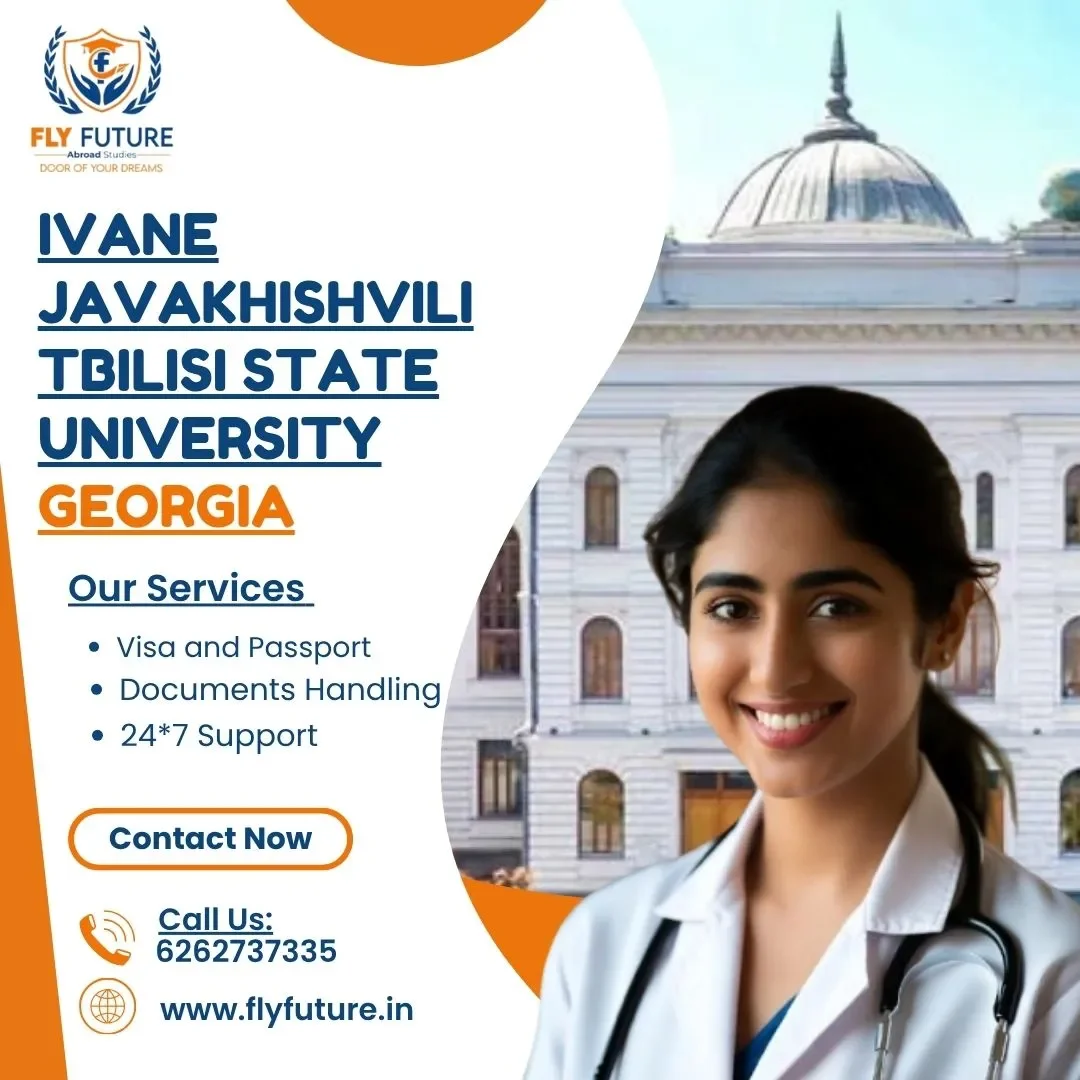
One of the most prominent universities in Georgia, Ivane Javakhishvili Tbilisi State University (TSU) is a pillar of higher education in the Caucasus. It was founded in 1918 and has the unique distinction of being Georgia's first national university, signifying the nation's dedication to modern education and intellectual independence. TSU, which is situated in the energetic capital city of Tbilisi, has developed into a world-renowned hub for academic achievement, innovative research, and cultural advancement.
The university was founded on the ideals of European-style education, academic independence, and scientific advancement, and it bears the name of its visionary creator, the well-known Georgian historian and scholar Ivane Javakhishvili. Since its founding, TSU has been crucial in forming Georgia's educational system, producing generations of professionals, scientists, and academics who have made substantial contributions both domestically and abroad.
TSU is frequently regarded as a top option for students hoping to pursue MBBS in Georgia because of its reasonable tuition, English-medium programs, and focus on hands-on clinical training. Its cutting-edge labs, digital libraries, and research-driven methodology combine to provide a dynamic and forward-thinking learning environment.
TSU's integration with the European Higher Education Area through the Bologna Process is one of the main factors contributing to its popularity on a worldwide scale. This guarantees that its degrees are compatible with international academic standards and are accepted on a global scale. Additionally, the university actively promotes academic mobility, collaborative research projects, and student exchange programs with more than 200 partner institutions across the globe.
Why Choose Ivane Javakhishvili Tbilisi State University Georgia TSU for MBBS Program in Georgia ?
Important Advantages
- Globally recognized degree
- Reasonably priced tuition
- English-language instruction
- European-standard curriculum
- No donation or capitation fee
- A secure nation for foreign students
- Exposure to global research initiatives
Quick Highlights of TSU Georgia
| Particulars | Details |
| University Name | Ivane Javakhishvili Tbilisi State University |
| Established | 1918 |
| Location | Tbilisi, Georgia |
| Type | Public Research University |
| Students | 22,000+ |
| Medium of Instruction | English & Georgian |
| Recognition | Global (Europe, WHO standards, etc.) |
| Courses Offered | MBBS, Science, Humanities, Law, etc. |
| Ranking | Top 2% globally (as per reports) |
Ranking Ivane Javakhishvili Tbilisi State University World Country
| Ranking Body | Position |
| QS World | 951-1000 |
| CWUR | 1047/20,966 |
| QS EECA | 118th |
| Country (EduRank) | 1st |
Faculties and Courses at TSU
| Faculty Name | Key Disciplines | Degrees Offered |
| Faculty of Humanities | History, Linguistics, Philosophy | BA, MA, PhD |
| Faculty of Law | International Law, Civil Law, Criminal Law | BA, MA, PhD |
| Faculty of Exact and Natural Sciences | Mathematics, Physics, Biology, Chemistry | BA, MA, PhD |
| Faculty of Social and Political Sciences | Political Science, Sociology, Psychology | BA, MA, PhD |
| Faculty of Economics and Business | Economics, Business Administration | BA, MA, PhD |
| Faculty of Medicine | General Medicine, Dentistry, Pharmacy | MBBS, MD, PhD |
| Faculty of Informatics and Control Systems | Computer Science, Information Technology | BA, MA, PhD |
 Popular Courses:
- MBBS / Medicine
- Computer Science
- International Relations
- Business Administration
- Law
MBBS Program at Ivane Javakhishvili Tbilisi State University Georgia
Pre-clinical, clinical, and internship phases of TSU's six-year MBBS program (equal to MBBS) are all taught in English. It integrates theory, laboratory, and hospital rotations in accordance with Georgia's National Center for Educational Quality Enhancement guidelines.
Beginning with fundamentals like anatomy and biochemistry, the curriculum moves on to pediatrics and surgery. Dedicated supervisors are assigned to small groups (10–12 kids), integrating arts for holistic development. Graduates receive a globally recognized Master of Medicine degree.
FMGE preparation and NEET alignment are beneficial to Indian students from the very beginning. In order to prepare students for real-world practice, TSU's curriculum places a strong emphasis on clinical exposure at connected Tbilisi hospitals.
Research and Innovation at TSU With a number of research facilities and labs devoted to the natural sciences, humanities, social sciences, and technology, TSU is one of Georgia's top research institutions.
Important Research Facilities
- The National Center for Manuscripts in Georgia
- Center for European Studies
- Institute of Geophysics and Astronomy
- Current Projects and Innovations
TSU has participated in regional partnerships and EU-funded research initiatives that address environmental concerns, technical developments, and cultural preservation.
MBBS Syllabus TSU Georgia
| Year | Key Subjects | Focus Areas |
| 1 | Anatomy, Histology, Medical Biology, Chemistry, Biophysics | Foundation sciences; lab dissections |
| 2 | Physiology, Biochemistry, Microbiology, Pathology Intro, Pharmacology Basics | Pre-clinical integration; public health intro |
| 3 | Pathology Advanced, Pharmacology, Community Medicine, Internal Medicine Intro | Para-clinical bridge to clinics |
| 4 | Surgery, Pediatrics, Obstetrics-Gynecology, Radiology | Core clinical rotations begin |
| 5 | Advanced Surgery, Psychiatry, Dermatology, Emergency Medicine | Hospital-based practice intensifies |
| 6 | Internship, Electives, Research Project | Full-time hospital duties; thesis |
MBBS Course Overview
| Parameter | Details |
| Course Duration | 6 Years |
| Medium | English |
| Eligibility | 50% in PCB + NEET |
| Internship | Included |
| Global Recognition | Yes |
TSU vs Other Countries for MBBS
| Feature | TSU Georgia | India | Russia |
| Fees | Affordable | High (Private) | Moderate |
| Entrance Exam | NEET Only | NEET + Counseling | NEET |
| Donation | No | Yes (Private) | No |
| Medium | English | English | English |
| Global Exposure | High | Limited | Moderate |
Hostels - Ivane Javakhishvili Tbilisi State University Georgia
| Feature | Details |
| Room Type | 2-3 sharing, fully furnished |
| Annual Cost | USD 1,000-3,000 (INR 85k-2.5L) |
| Hostel Facilities | Wi-Fi, heating/AC, laundry, kitchen, 24/7 security |
| Additional | Medical center, gym, cafeteria, library, computer labs |
| Accessibility | Disability-friendly infrastructure |
| Mandatory | Yes for first-year MBBS students |
Infrastructure and Facilities - TSU Georgia
| Category | Key Facilities |
| Academic | 9 faculties, modern lecture halls, simulation labs, research centers |
| Medical-Specific | Anatomy dissection halls, pharmacology labs, hospital ties (e.g., Tbilisi clinics) |
| Student Support | Conference rooms, library (digital access), sports complex, auditorium |
| Tech/Comfort | High-speed internet, conference rooms, AC buildings |
| Safety/Health | 24/7 medical center, emergency services, counseling |
TSU Georgia vs Other Medical Universities in Georgia MBBS
| University | Annual Tuition (USD) | FMGE Pass % | Country Rank | Unique Edge |
| TSU | 6,000-8,000 | 30-35% | 1st | Historic prestige, strong faculty |
| TSMU | 8,000-13,000 | 25-30% | 4th | Clinical focus |
| Batumi Shota Rustaveli | 5,000-7,000 | 20-25% | Lower | Coastal location, affordable |
MBBS Fees Structures - Ivane Javakhishvili Tbilisi State University
| Component | Per Year (USD) | Per Year (INR Approx.) | 6-Year Total (USD) |
| Tuition | 6,000-8,000 | 5-6.7 lakhs | 36,000-48,000 |
| Hostel | 1,000-3,000 | 40.85-2.5 lakhs | 6,000-18,000 |
| Living/Food | 1,500-2,500 | 1.25-2 lakhs | 9,000-15,000 |
| Grand Total | 8,500-13,500 | 7-11 lakhs | 51,000-81,000 |
Eligibility Criteria for MBBS at TSU Georgia
| Criteria | Requirements |
| Age | 17+ by Dec 31, 2026 |
| Academic | 50% aggregate in PCB (40% SC/ST/OBC) in 12th; English compulsory |
| Entrance | NEET qualified (no min score specified) |
| Language | English proficiency via interview (no IELTS/TOEFL needed) |
| Other | Good health; no criminal record |
| General category | 50% PCB; reserved: 40% |
Food & Living Cost Table TSU Georgia Monthly
| Item | Monthly Cost (GEL) | Monthly (INR Approx.) |
| Hostel/Accommodation | 400-800 | 13k-27k |
| Food (Home Cooked) | 180-240 | 6k-8k |
| Food (Eating Out) | 240-360 | 8k-12k |
| Transport | 45-75 | 1.5k-2.5k |
| Utilities/Personal | 90-150 | 3k-5k |
| Total | 955-1,625 | 32k-55k |
Required Documentation : TSU MBBS Admission Georgia
| Document | Details |
| Academic | 10th/12th marksheets & certificates |
| Entrance | NEET scorecard (latest) |
| ID | Passport (valid 18+ months), Aadhaar |
| Health | HIV/AIDS negative report, COVID negative, full medical fitness |
| Financial | Bank statement (1st year fees proof) |
| Photos | Passport size (6-8) |
| Other | Uni offer letter, Georgia embassy legalization, police clearance |
TSU Georgia vs Other Indian Medical Universities MBBS
| Parameter | TSU Georgia (6 Yrs) | Private Indian (e.g., DY Patil) | Govt Indian (e.g., via NEET) |
| Total Fees (INR) | 42-65 lakhs | 93 lakhs-1.85 Cr | 5-20 lakhs |
| Donation | None | Often 20-50 lakhs | None |
| FMGE Needed | Yes (30-35%) | No | No |
| Seat Ease | Direct post-NEET | High competition | Extreme (top ranks) |
| Medium | English | English | English |
| Global Recognition | WHO/NMC | MCI/NMC | MCI/NMC |
FAQ's
1.Is TSU good for MBBS?
Yes, TSU is among Georgia's top colleges, offering reasonable tuition and international recognition.
2. Is NEET necessary?
For Indian students, NEET is indeed required.
3. Is the degree recognized in India?
Yes, but students need to pass the FMGE/NEXT exam.
4. What is TSU's official language of instruction?
Although many programs are available in Russian and English, Georgian is the primary language.
5. Does TSU provide international students with scholarships?
Based on need and merit, TSU does provide a variety of scholarships.
6. Does TSU have international recognition?
TSU has agreements with numerous colleges across the globe and is accredited internationally.
In Conclusion
Ivane Javakhishvili Tbilisi State University, which combines modern innovation with rich tradition, is a pillar of Georgian higher education.
Over 20,000 students attend Ivane Javakhishvili Tbilisi State University, which is home to a varied student body that includes an increasing number of international students from nations like India, Nepal, and other parts of Europe and Asia.
This multicultural setting improves the educational experience by exposing pupils to the world while they are learning in a friendly and secure nation. The university is a comprehensive center for higher education since it offers a broad range of programs in fields like medical, science, humanities, law, economics, and social sciences. It is a preeminent institution both locally and growing internationally because to its dedication to academic quality, research, and cultural preservation.