

Orenburg State Medical University
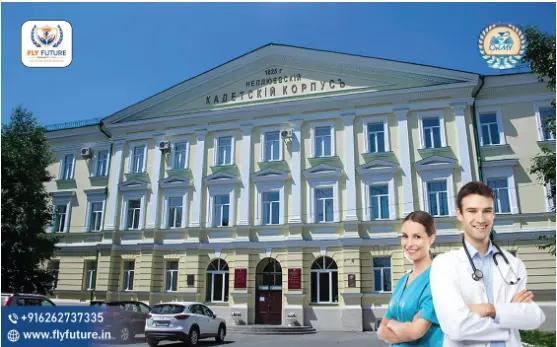
Orenburg State Medical University OrSMU | Study Abroad Russia 2026-27
Orenburg State Medical University is located in the city of Orenburg, Russia and was founded in 1944 by F.M. Lazarenko as Chkalov Medical Institute. This medical institute was reorganized into the Orenburg State Medical University in 1994. The university provides all modern technologies and meets all requirements for higher education. Graduates of this university occupy leading positions in public and private. More than 3,000 students and more than 500 academic professors in this University.
Orenburg Medical University is known for its high-quality medical education and world-class specialists. We provides hostel facilities and plenty of accommodation to Indian at affordable cost. We provide quality education and better accommodation for Students. The courses according to the guidelines of the Ministry of Health of the Russian Federation.
The institution's long history of medical education can be traced back to the growth of medical education in the area during the Soviet era. It evolved from a medical school to a larger university offering undergraduate, graduate, and specialized healthcare education over time.
Orenburg State Medical University, commonly abbreviated as OrSMU, is a medical university located in Orenburg, Russia. The university's clinical training structure, general medicine program, international student intake, and committed medical academic environment may make it appealing to Indian students. Additionally, compared to studying medicine in Moscow, Saint Petersburg, or other major Russian cities, its location offers a very different experience.
Orenburg State Medical University Ranking :
Country : 233
World : 5109
QUICK HIGHLIGHTS ABOUT ORENBURG STATE MEDICAL
| Particular | Details |
| University Name | Orenburg State Medical University |
| Common Abbreviation | OrSMU / OSMU |
| Country | Russia |
| City | Orenburg |
| University Type | State medical university |
| Main Academic Area | Medicine and healthcare |
| Major Undergraduate Program | General Medicine |
| General Medicine Duration | Six years, according to university program information |
| Study Mode | Full-time |
| International Students | Yes |
| Clinical Education | Progressive practical and clinical training |
| Postgraduate Education | Available in multiple medical specialties |
| Climate | Continental with cold winters |
| Main Language in Daily Life | Russian |
| Indian Applicants | Must satisfy current Indian eligibility and regulatory requirements |
| NEET | Applicable to Indian students under current rules |
| Tuition Fee | Must be confirmed for the relevant academic year |
| Hostel | Availability and fee should be confirmed directly |
| Indian Registration | Subject to applicable NMC rules and licensing requirements |
ELIGIBILTY FOR ADMISSION IN MBBS AND REQUIRED DOCUMENTS:-
ELIIBILTY CRITERIA
- The candidate must having the Indian nationality.
- The applicant must have clear the 12th standard with the subjects Physics, Chemistry, Biology and English.
- The applicant must complete 17 years of age on or before 31st Dec of applying year.
- The applicant must clear NEET exam.
REQUIRED DOCUMENTATION
- 10th and 12th passing mark sheets and transfer certificates
- Bachelor’s passing mark sheet and transfer certificates
- Copy of the international passport ( Should have minimum validity of 2 years) and any other ID proof.
- 8 passport size photograph.
- Bank Balance certificate or Financial documents.
- A return air ticket with the open return date of leaving during 1 year on arrival.
- Meental and physical fitness certificated attested by ministry of foreign affairs.
- Birth certificate on arrival
HOSTEL ACCOMODATION:-
- Every rooms of the campus are integrated with a bed, pillow, mattress, blanket, desk with chair, water heaters and suitable lighting for both study and relaxation.
- All hostel rooms are furnished and vary in size and with the wifi facility in most of the rooms.
- Dormitory rooms can accommodate 2 or 3 students in each room.
- There are common areas where students can mingle and can arrange sports and cultural and educational program.
- Every room in the campus is assembled with kitchen for students to cook food to their own Choice. Students will only need to arrange their own utensils and cooking meals.
- The administrative unit of the university is responsible for housekeeping, room cleaning and student’s security.
- For foreigner students there is a mess facility provided by the campus according to their food.
- Attached washrooms are provided in all the rooms
Orenburg State Medical University Fees Structure 2026-27
| University | 1st Year | 2nd Year | 3rd Year | 4th Year | 5th Year | 6th Year | Total |
|---|---|---|---|---|---|---|---|
| Orenburg State Medical University | 6000$ | 6000$ | 6000$ | 6000$ | 6000$ | 6000$ | 36000$ |
| Orenburg State Medical University | 4,80,000 INR | 4,80,000 INR | 4,80,000 INR | 4,80,000 INR | 4,80,000 INR | 4,80,000 INR | 28,80,000 INR |
Note :
1 USD = 80 INR
Hostel Fee : Included in fees
Visa & Medical Insurance : 200$ = 15000 INR Per Year (Approx)
Why choose to Orenburg State Medical University ?
- No entrance exam, donation required.
- Easy admission process.
- High standards of medical education.
- Cost of MBBS in Russia is affordable.
- The medium of education in Russia is English.
- MBBS degree from Orenburg State Medical University is recognized by all major associations like ECFMG, WDOMS, FAIMER, NMC(MCI), etc. Indian scholars who complete their MBBS from Orenburg State Medical University can also work abroad in India Graduate Medical Examination.
- Hostels with the best facilities.
- More than 1,200 Indian students.
- Students can choose between English and Russian at their discretion.
General Medicine at Orenburg State Medical University
| Programme detail | Information students should verify |
| Official programme name | General Medicine or the exact title used by the university |
| Common Indian term | MBBS in Russia |
| Qualification awarded | Official degree or specialist qualification granted after graduation |
| Course duration | Confirm whether the programme is six years and full-time |
| Curriculum | Current academic syllabus and subject structure |
| Medium of instruction | English, Russian or a combination of languages |
| Clinical training | Hospitals, departments and practical exposure available to students |
| Internship | Duration, location and supervision arrangements |
| Degree-awarding institution | Legal name of the university issuing the qualification |
| Academic workload | Total academic hours, practical classes and clinical training requirements |
| Examination system | Written, oral, practical, clinical and final examinations |
| Attendance requirements | Minimum attendance required for lectures and clinical rotations |
| Registration pathway | Requirements applicable in the country where the student plans to practise |
Understanding the Six-Year Medical Course
| Year | Broad learning focus | Typical academic development |
| First year | Basic sciences and introduction to medicine | Introduction to medical terminology, anatomy, biology, chemistry and the structure of the medical profession |
| Second year | Anatomy, physiology and pre-clinical subjects | Detailed study of the human body, normal body functions and foundational medical sciences |
| Third year | Pathology, pharmacology and early clinical disciplines | Understanding disease mechanisms, medicines, microorganisms and introductory clinical methods |
| Fourth year | Major clinical subjects | Study of internal medicine, surgery, paediatrics and other important clinical disciplines |
| Fifth year | Advanced clinical medicine and specialist rotations | More detailed diagnosis and treatment across major specialties and hospital departments |
| Sixth year | Clinical consolidation and practical training | Application of medical knowledge, supervised clinical practice, revision and final academic requirements |
Core Areas of Medical Study
| Basic-science subject | What students generally learn |
| Anatomy | Structure of the human body, organs, tissues and anatomical relationships |
| Histology | Microscopic structure of cells and tissues |
| Physiology | Normal functions of the human body and its organ systems |
| Biochemistry | Chemical processes, metabolism, enzymes and molecular functions |
| Genetics | Heredity, genetic variation and inherited disorders |
| Medical biology | Biological principles relevant to human health and disease |
| Microbiology | Bacteria, viruses, fungi and other microorganisms |
| Immunology | Immune responses, antibodies and immune-related disorders |
| Medical physics | Physical principles used in diagnosis, imaging and treatment |
| Medical terminology | Medical vocabulary and terminology used in clinical practice |
Orenburg State Medical University vs Other Russian Medical Universities
| Feature | Orenburg State Medical Univ. | First Moscow State Medical Univ. | Kazan Federal Univ. | Far Eastern Federal Univ. |
| Type | Government | State | Federal | Federal |
| National Ranking (Russia) | #15–16 | Top 3 | Top 8–10 | #11–16 |
| World Ranking | 5725th globally | 651–700 | 450 | 631–731 |
| Medium of Instruction | English | English | English | English |
| FMGE Pass Rate (India) | 43.4% approx. | 80%+ | 68% | 60–65% |
| Campus Facilities | Modern, 18+ hospitals for clinicals | State of the art facilities | Modern facilities | Good facilities |
| Indian Student Population | 1200+ | Large Indian community | Large Indian community | Large Indian community |
Orenburg State Medical University vs Indian Medical Universities
| Feature |
|
Top Indian Government Medical College | Top Indian Private Medical College | |
| MBBS Duration | 6 years (incl. Internship) | 5.5 years (incl. Internship) | 5.5 years (incl. Internship) | |
| Medium of Instruction | English | English | English | |
| NEET Requirement | Yes | Yes | Yes | |
| NMC Recognition | Yes | Yes | Yes | |
| Seats Available for Indian Students | 1200+ | Limited | Limited | |
| Global Degree Recognition | Yes (WHO, NMC, USMLE, PLAB) | India-centric | India-centric | |
| Indian Mess / Cultural Support | Available | Not applicable | Not applicable |
Orenburg State Medical University's OSMU Practical Training
The emphasis on progressive practical training in Orenburg's General Medicine program is one of its most significant features.
According to information released by the university, students progress thru increasingly complex practical roles throughout the course.
The university's stages include real-world experience related to:
- Medical assistants
- Functions of nursing
- Nursing care
- Physician support in hospitals
- Adult polyclinic medical support
Because medical students require progressive exposure, this is important from an academic standpoint.
Prior to learning more complex clinical skills, a student should first gain an understanding of the healthcare setting.
Planning a Career After Graduation
Going Back to India
The relevant foreign medical graduate pathway must be followed by students who intend to return to India. This could entail an exam, temporary registration, internship, or other requirements, depending on the regulations in effect.
Employed in Russia
Students who want to work in Russia must meet the language, licensing, and registration requirements. Graduation by itself might not grant you the right to practice.
Postgraduate studies
Graduates may consider postgraduate education in India, Russia or other countries. Eligibility may depend on:
- Degree recognition.
- Academic performance.
- Licensing status.
- Entrance examinations.
- Internship completion.
- Language requirements.
- University-specific criteria.
Research and public health
Graduates may also explore careers in:
- Clinical research.
- Public health.
- Epidemiology.
- Medical administration.
- Healthcare management.
- Pharmaceutical studies.
- Biomedical research.
- Medical writing.
- Health policy.
- Laboratory science.
 Challenges Students Should Consider
Clinical correspondence
Without proficiency in Russian, a student's capacity to communicate with patients may be restricted.
Licensing requirements
The right to practice in India or another nation is not always guarantyd by a foreign university degree.
Changes in currency
Converting Russian rubles to Indian rupees may affect the cost of living expenses and tuition.
Cold climate
Indian students might need a lot of time to get used to the cold.
Russian language
Even tho lectures are taught in English, a basic understanding of Russian may be necessary for everyday life and clinical interactions.
Distance from India
Traveling can be costly and time-consuming, especially during emergencies or holidays.
Different educational system
Different teaching strategies, exam formats, and academic standards may be encountered by students.
Advantages of Studying at OrSMU
| Feature / Aspect | Description | Key Student Benefit |
| Global Accreditation & Recognition | Recognized by global bodies including the World Health Organization (WHO), World Directory of Medical Schools (WDOMS), and the National Medical Commission (NMC) of India. | Graduates are eligible to take global licensing exams such as NExT/FMGE (India), USMLE (USA), PLAB (UK), and AMC (Australia) |
| English-Medium Instruction | Complete 6-year MBBS program offered in English for foreign students. | Eliminates initial language barriers in core medical coursework and lectures. |
| Affordable Fee Structure | Subsidized tuition fees and affordable cost of living in Orenburg compared to Western universities. | High-quality medical degree accessible without heavy financial burden or capitation/donation fees. |
| Clinical & Practical Exposure | Features 18+ affiliated clinical hospitals, 47+ specialized departments, and advanced simulation labs. | High ratio of practicing clinicians on faculty ensures hands-on patient interaction and skill building. |
| Experienced Faculty | Over 800 faculty members, including doctors of medical science and professors with international training. | Strong student-to-faculty ratio (~1:9) allowing individual attention and mentoring. |
| Hostel & Amenities | On-campus hostels equipped with security, internet, recreation areas, and dedicated Indian mess facilities | Safe and comfortable living conditions tailored for international student cohorts. |
Orenburg State Medical University Admission Process
| No. | Admission step | Details |
| 1 | Check eligibility | Confirm completion of Class 12 with Physics, Chemistry and Biology and meet the applicable age and academic requirements. |
| 2 | Qualify NEET-UG | Indian students should qualify NEET-UG according to the current rules for studying medicine abroad. |
| 3 | Select the programme | Verify the official General Medicine programme name, qualification awarded, course duration and teaching language. |
| 4 | Prepare documents | Arrange the passport, Class 10 and Class 12 certificates, marksheets, NEET scorecard, photographs and medical documents. |
| 5 | Submit the application | Complete the application form through verifiable abroad consultant like Fly Future |
| 6 | Complete document verification | Allow the university to review academic records, eligibility information and submitted documents. |
| 7 | Receive the admission letter | Obtain the official admission or acceptance letter after successful document verification. |
| 8 | Pay official fees | Confirm tuition, hostel and additional charges in writing, then pay through an authorised university payment channel. |
| 9 | Apply for the student visa | Use the official invitation letter and submit the required documents to the Russian embassy or consulate. |
| 10 | Travel and complete registration | After visa approval, travel to Russia, complete university and hostel registration, fulfil medical requirements and begin classes. |
Faq's of OrSMU (Orenburg Medical University):
1. Does Orenburg State Medical University have WHO and NMC recognition ?
The World Health Organization (WHO), the National Medical Commission (NMC) of India, and the World Directory of Medical Schools (WDOMS) all acknowledge Orenburg State Medical University.
2. How long does Orenburg State Medical University's MBBS program last ?
In accordance with NMC regulations, the six-year MBBS program consists of a one-year required internship in Russia in addition to five years of classroom and clinical instruction.
3. What is the MBBS program's mode of instruction ?
The complete MBBS program is taught in English, particularly for students from other countries, such as India.
4. Does Orenburg State Medical University require the NEET ?
According to NMC regulations, Indian students must have a NEET qualification in order to apply to and study MBBS at any overseas medical university, including OrSMU.
5. What are the requirements for admission to Orenburg State Medical University's MBBS program ?
In order to qualify, students need to:
be at least 17 years old by the admittance year's December 31st.
possess a 12th grade PCB (Physics, Chemistry, Biology) grade of 50% (with 40% going to reserved categories).
Be eligible for NEET
6. How much does Orenburg State Medical University charge for MBBS tuition ?
Depending on exchange rates, the average annual tuition expense is between 3.5 and 4.2 lakhs. Between 22 and 28 lakhs INR is the anticipated overall cost for six years, including hostel, visa, etc.
8. Are Indian students able to use the hostel facilities ?
Yes, the university offers cozy and reasonably priced dorm rooms with Wi-Fi, heating systems, Indian cuisine options, and round-the-clock security.
9. Does the university provide meal services or an Indian mess ?
Yes, Indian students residing in the hostel have access to vegetarian and non-vegetarian Indian meal alternatives.
10. What percentage of OrSMU grads passed the FMGE (MCI Screening Test) ?
In comparison to other Russian universities, Orenburg State Medical University has a respectable FMGE passing rate. The success rate is considerably increased with adequate planning and direction from FMGE coaching.
11. How is Orenburg State Medical University's clinical exposure going ?
Beginning in their third year, students have extensive practical exposure in government-affiliated hospitals, where they handle patients in real time under the supervision of skilled medical professionals.
12. Is the OrSMU MBBS degree recognized in India ?
As long as the student passes the FMGE/NEXT exam after finishing the course, the MBBS degree is recognized in India.
13. Are there any scholarships available at Orenburg State Medical University ?
There aren't many scholarships available for overseas students, however occasionally there are merit-based breaks or scholarships through partnerships with Indian consultancies. Consult your MBBS abroad advisor.
Top Medicine Universities in Russia :
- Crimean Federal University
- Kazan State Medical University
- Kursk State Medical University
- Kazan Federal University
- Far Eastern Federal University
- Northern State Medical University
- Orel State University
- Bashkir State University
- Ulyanovsk State University
- Peoples’ Friendship University
- Pirogov Russian National Research Medical University
- First Moscow State Medical University
- Volgograd State Medical University
- Altai State Medical University
- Omsk State Medical University