

Pirogov Russian National Research Medical University
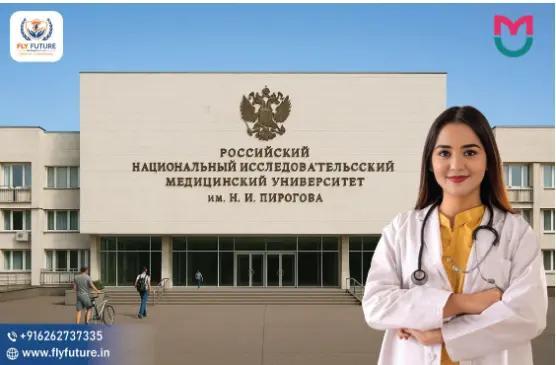
Overview of Pirogov Medical University RNRMU Russia 2026-27
Pirogov Medical University The ranking in the world and in the country is very well known. Pirogova National Medical University RNRMU provides library facilities to scholars. The library was founded in 1906 and is located on the school premises. It consists of seven volumes of 50,000 books. The library is also connected with internet facility for the benefit of the scholars. It also provides scholars with access to e-journals and e-books. This library consists of 12,15,000 numbers of scientific literature and 1,71,000 numbers of textbooks with 6,48,000 thousand fictional books.
The success of Pirogov Russian National Research Medical University is the involvement of several generations of professors, lecturers, researchers, students, administrative and management staff. The plan of the university now and in the future is to be a worthy successor to the honor and glory of previous generations and to continue and strengthen the good traditions of the university.
Because Pirogov University offers programs for foreign nationals and an English-mediated route for some medical programs, it can be especially appealing to international applicants. Dentistry, pharmacy, general medicine, and a number of other specialized programs are listed in its current official information. The university requires foreign applicants to take entrance exams in Chemistry and Biology for the English-language route in General Medicine.
Pirogov Medical University Moscow World Ranking :
Country : 24
World : 677
QUICK HIGHLIGHTS ABOUT PIROGOV RUSSIAN NATIONAL REASEARCH RNRMU
| Particular | Details |
| University | Pirogov Russian National Research Medical University RNRMU |
| Common Name | Pirogov University |
| Location | Moscow, Russia |
| Historical Beginning | 1906 |
| University Status | Since 1991 |
| National Research University Status | Granted in 2010 |
| Named After | Nikolai Ivanovich Pirogov |
| Major Medical Program | General Medicine / ???????? ???? |
| General Medicine | Specialist-level medical education |
| English-Mediated Route | Available for eligible foreign applicants |
| Entrance Subjects for English Route | Chemistry and Biology |
| Major Clinical Infrastructure | 200+ clinical bases listed by the university for General Medicine |
| Faculties/Institutes | Medical, pediatric, dental, biomedical and other academic areas |
| Student Accommodation | University dormitory system |
| Dormitory Capacity | 3,280 places across four buildings |
| City | Moscow |
| International Students | Yes |
ELIGIBILTY FOR ADMISSION IN MBBS AND REQUIRED DOCUMENTS:-
ELIIBILTY CRITERIA
- The candidate must having the Indian nationality.
- The applicant must have clear the 12th standard with the subjects Physics, Chemistry, Biology and English.
- The applicant must complete 17 years of age on or before 31st Dec of applying year.
- The applicant must clear NEET exam.
HOSTEL ACCOMODATION:-
- Every rooms of the campus are integrated with a bed, pillow, mattress, blanket, desk with chair, water heaters and suitable lighting for both study and relaxation.
- All hostel rooms are furnished and vary in size and with the wifi facility in most of the rooms.
- Dormitory rooms can accommodate 2 or 3 students in each room.
- There are common areas where students can mingle and can arrange sports and cultural and educational program.
- Every room in the campus is assembled with kitchen for students to cook food to their own Choice. Students will only need to arrange their own utensils and cooking meals.
- The administrative unit of the university is responsible for housekeeping, room cleaning and student’s security.
- For foreigner students there is a mess facility provided by the campus according to their food.
- Attached washrooms are provided in all the rooms.
Pirogov Russian National Research Medical University Fees Structure 2026-27
| University | 1st Year | 2nd Year | 3rd Year | 4th Year | 5th Year | 6th Year | Total |
|---|---|---|---|---|---|---|---|
| Pirogov Russian National Research M.U | 7,50,000 RUB | 7,50,000 RUB | 7,50,000 RUB | 7,50,000 RUB | 7,50,000 RUB | 7,50,000 RUB | 45,00,000 RUB |
| Pirogov Russian National Research M.U | 7,50,000 INR | 7,50,000 INR | 7,50,000 INR | 7,50,000 INR | 7,50,000 INR | 7,50,000 INR | 45,00,000 INR |
Note :
Note : 1 RUB = 1 INR
Hostel Fee : 32500 RUB = 32500 INR Per Year (Approx)
Visa & Medical Insurance : 7500 RUB = 7500 INR Per Year (Approx)
Pirogov Russian National Research Medical University vs Other Russian Medical Universities
| Criteria | Pirogov Russian National Research Medical University | Sechenov First Moscow State Medical University | Kazan State Medical University | Pavlov University, St. Petersburg | Tver State Medical University | |||||
| Location | Moscow | Moscow | Kazan |
|
Tver | |||||
|
401–450 | 186 | 3358 | 501–550 |
|
|||||
|
6 years (incl. internship) |
|
|
6 years | 6 years | |||||
|
English & Russian |
|
|
|
|
|||||
|
NMC, WHO, WDOMS, ECFMG, FAIMER | NMC, WHO, WDOMS | NMC, WHO, WDOMS | NMC, WHO, WDOMS | NMC, WHO, WDOMS | |||||
| FMGE Pass Rate | Above average | High | Moderate-to-high | Moderate-to-high | High | |||||
| Indian Student Community | Large, Indian mess | Large, Indian food available | Large | Moderate-to-large, Indian mess | Large |
Pirogov Russian National Research Medical University vs Indian Medical Universities
| Criteria | Pirogov Russian National Research Medical University | All India Institute of Medical Sciences (AIIMS) | Top Private Indian Med Colleges (e.g. Manipal, SRMC) |
| Location | Moscow, Russia | Multiple cities (Delhi/Main campus) | Metro or Tier-1 Indian cities |
| QS World Ranking (Medicine) | 401–450 | 240–270 (QS 2025, AIIMS) | Often not ranked globally |
| Entrance Difficulty | NEET qualifying marks + eligibility | Highly competitive; NEET top 1% scorers | NEET with variable cut-offs; donation/cap often needed |
| Medium of Instruction | English (and Russian optional) | English | English |
| Clinical Exposure | Major Moscow hospitals | Top Indian hospitals (AIIMS) | Varies widely; sometimes limited |
| FMGE/NExT Requirement | Yes (to practice in India) | Not required | Not applicable |
| Internship/Duration | 6 years incl. 1 yr internship | 5.5 years incl. 1 yr internship | 5.5 years incl. internship |
| Research Opportunities | High, many international collaborations | Very high in AIIMS | Moderate |
Why to Choose Pirogov Russian National Research Medical University ?
- Accredited by the Medical Council of India.
- Approved by the World Health Organization.
- Ranking of Pirogov Medical University is one of the best ranked medical universities in Russia.
- The ranking of Pirogov Medical University is located in the most lively and spectacular cities in Russia.
- Most of the massive government hospitals in Moscow are affiliated with Pirogov Medical University.
- Pirogov Medical University specializes in postgraduate subjects such as microbiology, pediatrics and therapeutics.
- The staff consists of more than 1,900 professors who teach 100 subjects under the same university fees, ensuring top quality education.
- There are no specific grade or grade requirements for admission to any course at Pirogov Medical University.
- The accommodation facilities are secured 24×7 with a thoroughly monitored CCTV office.
- Pirogova National Medical University provides library facilities to scholars.
Recognition and Approvals Relevant to Indian Students
For Indian aspirants, the critical recognitions are:
National Medical Commission (NMC), India
Because Pirogov University Medical Faculty is recognized by NMC under the FMGE/NExT framework, its graduates are eligible to take the licensing exam in India.
WDOMS, the World Directory of Medical Schools
The university is included in WDOMS, a joint WFME and FAIMER initiative that is becoming more and more crucial for future accreditation requirements and global mobility.
Russian Ministry of Science and Higher Education
Operating under complete governmental recognition and oversight, RNRMU is a state university.
WHO and other organizations
WHO recognition, which in reality refers to the WDOMS listing and past WHO recognition of Russian medical schools, is stated on numerous consultants' and university pages.
Advantage of Pirogov Medical University RNRMU
| Advantage | Simple Explanation |
| High academic reputation | Pirogov University is a leading medical research and education centre in Russia |
| Experienced faculty | Students learn from qualified teachers, doctors, and medical researchers. |
| Strong clinical training | Students receive practical training in affiliated hospitals and clinical departments. |
| Research opportunities | The university focuses on medical research, modern laboratories, and scientific development. |
| English-taught programmes | International students can study General Medicine in English. |
| International exposure | Students from different countries create a multicultural learning environment. |
| Modern facilities | The university provides laboratories, simulation facilities, libraries, and clinical learning resources. |
| Financial benefits | Eligible students may receive scholarships or tuition discounts, including discounts for preparatory-course students and high academic performers. |
| Location in Moscow | Studying in Moscow provides access to major hospitals, cultural activities, and professional opportunities. |
Student discipline and safety
Throughout their studies, international students at Pirogov University should stay informed about Russian laws and university regulations. They must maintain consistent attendance, abide by dorm rules, and act appropriately both on and off campus.
For a trouble-free and secure stay, students ought to:
- Protect their immigration documents and passports.
- On time, finish all registration requirements.
- Observe immigration and visa regulations.
- Steer clear of unlawful or unapproved employment.
- Observe local traditions and Russian laws.
- Observe hostel and university regulations.
- Attend classes and clinical training on a regular basis.
- Keep vital emergency phone numbers handy.
Any changes to your address or personal information should be reported to the university.
6-Year General Medicine (MBBS) Curriculum Breakdown
| Academic Year | Primary Domain | Core Coursework & Subjects Covered | Practical & Clinical Milestones |
| Year 1 | Pre-Clinical Foundations | Human Anatomy, Histology, Cytology, Embryology, Bioorganic Chemistry, Medical Physics, Latin, Medical Russian | Full anatomical cadaveric dissections; introduction to clinical ethics and vital signs examination. |
| Year 2 | Systemic Human Physiology | Human Physiology, Biochemistry, Microbiology, Virology, Immunology, Basic Pathophysiology, Medical Russian | Laboratory experiments in metabolic pathways and physiological diagnostic measurement. |
| Year 3 | Para-Clinical Diagnostics | General & Systemic Pathology, Pharmacology, Pathophysiology, Internal Medicine Propedeutics, General Surgery | Bedside teaching in Moscow clinical wards; patient history-taking and physical diagnosis. |
| Year 4 | Core Clinical Specialties | Internal Medicine (Cardiology, Pulmonology), General Surgery, Pediatrics, Obstetrics & Gynecology, Neurology | Ward rounds, OPD clinical observerships, and surgical assisting in affiliated hospitals. |
| Year 5 | Advanced Specialties | Advanced Surgery, Oncology, Traumatology, Orthopedics, Ophthalmology, ENT, Psychiatry, Public Health | Diagnostic planning, participation in clinical conferences, and advanced procedural skills. |
| Year 6 | Immersive Clinical Clerkship | Hands-on Clinical Rotations: Internal Medicine, Emergency Care, General Surgery, Pediatrics, OB-GYN | Sub-internship responsibilities: managing ward care, taking call duties, and assisting in surgeries under supervision. |
General Medicine at Pirogov University RNRMU
The General Medicine program is designed to provide comprehensive medical education.
The curriculum traditionally progresses from foundational sciences toward clinical subjects.
Typical academic areas include:
- Anatomy
- Histology
- Physiology
- Biochemistry
- Microbiology
- Pathology
- Pharmacology
- Immunology
- Genetics
- Public health
- Internal medicine
- General surgery
- Pediatrics
- Obstetrics and gynecology
- Neurology
- Psychiatry
- Dermatology
- Ophthalmology
- Otorhinolaryngology
- Radiology
- Emergency medicine
- Infectious diseases
- Oncology
- Rehabilitation
- Clinical diagnostics
The exact curriculum, sequence and practical components should always be checked in the university's current study plan because curricula can be revised.
Pirogov University publishes educational-program documentation, including calendars, study plans and educational materials for General Medicine.
The standard General Medicine program is six years.
| Stage | Broad Academic Focus |
| Year 1 | Basic medical and foundational sciences |
| Year 2 | Pre-clinical medical subjects |
| Year 3 | Medical sciences and introductory clinical disciplines |
| Year 4 | Clinical subjects and hospital-oriented learning |
| Year 5 | Advanced clinical disciplines |
| Year 6 | Senior clinical training and professional preparation |
Russian Language Preparation
International students should treat Russian language training as part of medical education.
A student who begins learning basic Russian before travelling can have an easier transition.
Useful areas include:
- Russian alphabet
- Basic conversation
- Numbers
- Days and dates
- Anatomical terminology
- Common symptoms
- Medical history questions
- Hospital vocabulary
- Prescription terminology
- Emergency expressions
Pirogov University RNRMU Affordable
One of the main motivations for many Indian families to look into Russian medical schools is affordability.
However, affordability should be assessed based on the entire cost of education rather than just tuition.
For instance:
- Tuition, lodging, food, insurance, travel, visa, personal expenses, and academic supplies make up the total cost of education.
- If housing and living expenses are reasonable, a university with a slightly higher tuition fee may occasionally become competitive.
- Similarly, a university that advertizes itself as "low fee" might end up being pricey if extra expenses are not made clear.
- Therefore, prior to admission, parents should ask for a comprehensive six-year financial estimate.
Documents Required for Admission
International admission generally requires educational and identity documentation.
Students should prepare documents such as:
| Document | Purpose |
| Passport | Identity and international travel |
| Class 10 certificate | Academic record |
| Class 12 certificate | Senior secondary qualification |
| Class 12 marksheet | Subject and marks verification |
| NEET document | Indian eligibility requirement where applicable |
| Birth certificate | Identity verification where requested |
| Passport-size photographs | Admission documentation |
| Medical documents | Health requirements |
| Migration-related documents | Russian immigration compliance |
| Translations | Required where documents are not accepted in original language |
| Admission forms | University application |
| Other university forms | As instructed by admissions office |
Documents Required for Admission
International admission generally requires educational and identity documentation.
Students should prepare documents such as:
| Document | Purpose |
| Passport | Identity and international travel |
| Class 10 certificate | Academic record |
| Class 12 certificate | Senior secondary qualification |
| Class 12 marksheet | Subject and marks verification |
| NEET document | Indian eligibility requirement where applicable |
| Birth certificate | Identity verification where requested |
| Passport-size photographs | Admission documentation |
| Medical documents | Health requirements |
| Migration-related documents | Russian immigration compliance |
| Translations | Required where documents are not accepted in original language |
| Admission forms | University application |
| Other university forms | As instructed by admissions office |
Admissions Process
| Stage & Step Name | Core Details & Key Requirements |
| Step 1: Academic Evaluation | Review of Class 10 and Class 12 marksheets to ensure candidates meet regulatory grade baselines in core science subjects (Physics, Chemistry, Biology). |
| Step 2: NEET Verification | Verification of NEET scorecard (specifically for Indian medical applicants) to fulfill national regulatory eligibility standards for medical studies abroad. |
| Step 3: University Application | Submission of the complete application packet to the university following current institutional guidelines and deadlines. |
| Step 4: Document Verification | Official checks by the admissions office to validate educational certificates, identity proofs, and passport details. |
| Step 5: Admission / Offer Documentation | Issuance of formal university admission documents and an official Offer Letter to accepted candidates. |
| Step 6: Contract & Fee Payment | Thorough review and execution of the educational contract followed by tuition fee payment. |
| Step 7: Visa Process | Processing of the official Russian student entry visa using the university-issued Ministry invitation letter and a valid passport. |
| Step 8: Travel to Russia | Flight booking and arrival coordination with the RNRMU International Student Department for safe arrival and assistance. |
| Step 9: Migration Registration | Completion of legal stay registration and local administrative procedures via the RNRMU International Students Center upon arrival in Russia. |
Accommodations in Hostels
For international students, RNRMU offers hostel accommodations on or close to campus.
Important characteristics:
Modern apartment-style dorms that foster cultural integration by housing international and Russian students.
Usually, two to three students share a room, with:
- Study tables, chairs, beds, mattresses, and closets.
- Depending on the block, shared or attached bathrooms are available.
- Some blocks have communal kitchens or kitchenettes.
According to some older data, living expenses in dorms can be as low as $12–40 per month. However, current packages for international students typically bundle hostels at 60,000–70,000 RUB/year.
In general, hostels have:
- Wi-Fi access (varies in speed).
- Laundry facilities (paid services or shared machines).
- wardens and entry controls for security.
- Shared spaces for leisure and study.
Student Life in Moscow
Moscow provides a very different experience from studying in a smaller Russian city.
Students can experience:
- A large metropolitan environment
- International communities
- Extensive public transport
- Museums
- Libraries
- Cultural institutions
- Restaurants
- Shopping centers
- Parks
- Sports facilities
Clinical Exposure at Pirogov University
One of the most crucial aspects of medical education is clinical exposure.
There are currently over 200 clinical bases associated with the program listed on the university's General Medicine page.
Students may have the chance to interact with a variety of patient populations and medical specialties thru a sizable clinical network.
Clinical education could include:
- Observation of patients
- Taking a medical history
- Physical assessment
- Discussions of clinical cases
- Interpretation of diagnoses
- Ward rounds
- Observation during surgery
- Exposure to emergency medications
- Useful abilities
- Clinical training under supervision
FAQ's
Q1: Does Pirogov Russian National Research Medical University require NEET qualifications for Indian applicants ?
Yes, all Indian candidates must receive the minimum qualifying scores required by NMC for the NEET-UG exam (50th percentile for General/EWS, 40th percentile for SC/ST/OBC, and 45th percentile for PwD).
Q2: Are English proficiency exams like the TOEFL and IELTS required ?
No, entrance to Pirogov Russian National Research Medical University's MBBS program does not require the TOEFL or IELTS.
Q3: Are donations or capitation fees required for admission to Pirogov University ?
No, there is no need for a donation or capitation fee; the admissions procedure is transparent and merit-based.
Q4: What kinds of facilities and lodging are offered to Indian students ?
Hostels at universities provide safe, reasonably priced accommodation (with Indian food options), gyms, sports facilities, free WiFi, access to health centers, and a friendly Indian student body.
Q5: What kind of campus culture and support are available to international and Indian students ?
There are plenty of chances for international exchange, students can join sports and charitable clubs, Indian festivals are observed, and advisory teams assist students in adjusting to life in Russia.
Top Russian Medical Universities :
- Northern State Medical University
- Orel State University
- Bashkir State University
- Ulyanovsk State University
- Peoples’ Friendship University
- Pirogov Russian National Research Medical University
- First Moscow State Medical University
- Volgograd State Medical University